From 10 Iterations to 3: Improving Speed and Confidence in Pricing Decisions


Data Visualization • Product Strategy • End-to-End product design• Decision Intelligence

From 10 Iterations to 3: Improving Speed and Confidence in Pricing Decisions


Data Visualization • Product Strategy • End-to-End product design• Decision Intelligence

Executive Summary :)

Executive Summary :)

Problem

The pricing and planning team at a leading CPG company used a simulation tool to test pricing scenarios — for example, adjusting the price of a 100ml ketchup bottle from $4.99 to $5.99 and observing how it affects demand, margin, and revenue.

However, the tool was slow, unintuitive, and difficult to navigate. Category managers often spent hours creating multiple scenarios, struggling to interpret results, and rarely used the tool because of its steep learning curve.

My Role

As a Full-Stack Design Consultant, I led the end-to-end engagement:

  • Defined success criteria and project roadmap in partnership with business stakeholders.

  • Conducted heuristic evaluation and synthesized 50+ usability recommendations.

Impact

  • The project became a benchmark framework for designing simulation tools across the

    • 70% reduction in scenario testing iterations (10 → 3).

    • 2× faster decision turnaround for pricing and planning teams.

    • Framework adopted by 5+ global teams as a design benchmark for future simulation tools.

    • Improved team confidence in pricing outcomes, validated through stakeholder workshops and usability sessions.

Let's deep dive!

Let's deep dive!

Translating business goals to design goals

Help category teams make faster, more confident pricing decisions!

  1. Reducing scenario creating time

    Making it faster to build, analyze, compare multiple pricing simulations

  1. Integrating the tool into existing workflows

    Making it faster to build, analyze, compare multiple pricing simulations

  1. Lowering the learning curve

    Simplifying interfaces and interactions for occasional users (this tool would be used once/twice a year

Establishing the framework for effective simulator design

Identifying the Gap

While auditing the existing simulation tool, I realized there were no clear benchmarks to evaluate whether a simulator was well-designed or effective.
I initially used standard heuristic frameworks to assess usability, but they didn’t fully capture the end-to-end flow of how a simulator should function. The frameworks helped highlight usability issues, but not what an effective simulator must include to enable confident decision-making.

Speaking to Experts

To bridge this gap, I collaborated with several subject matter experts (SMEs) across analytics, category management, and data science.

Through these discussions, I focused on understanding what makes a scenario simulation truly effective:

  • what information users need,

  • how they interpret outputs, and

  • what helps them reach a confident decision in the fewest iterations possible.

Developing the framework

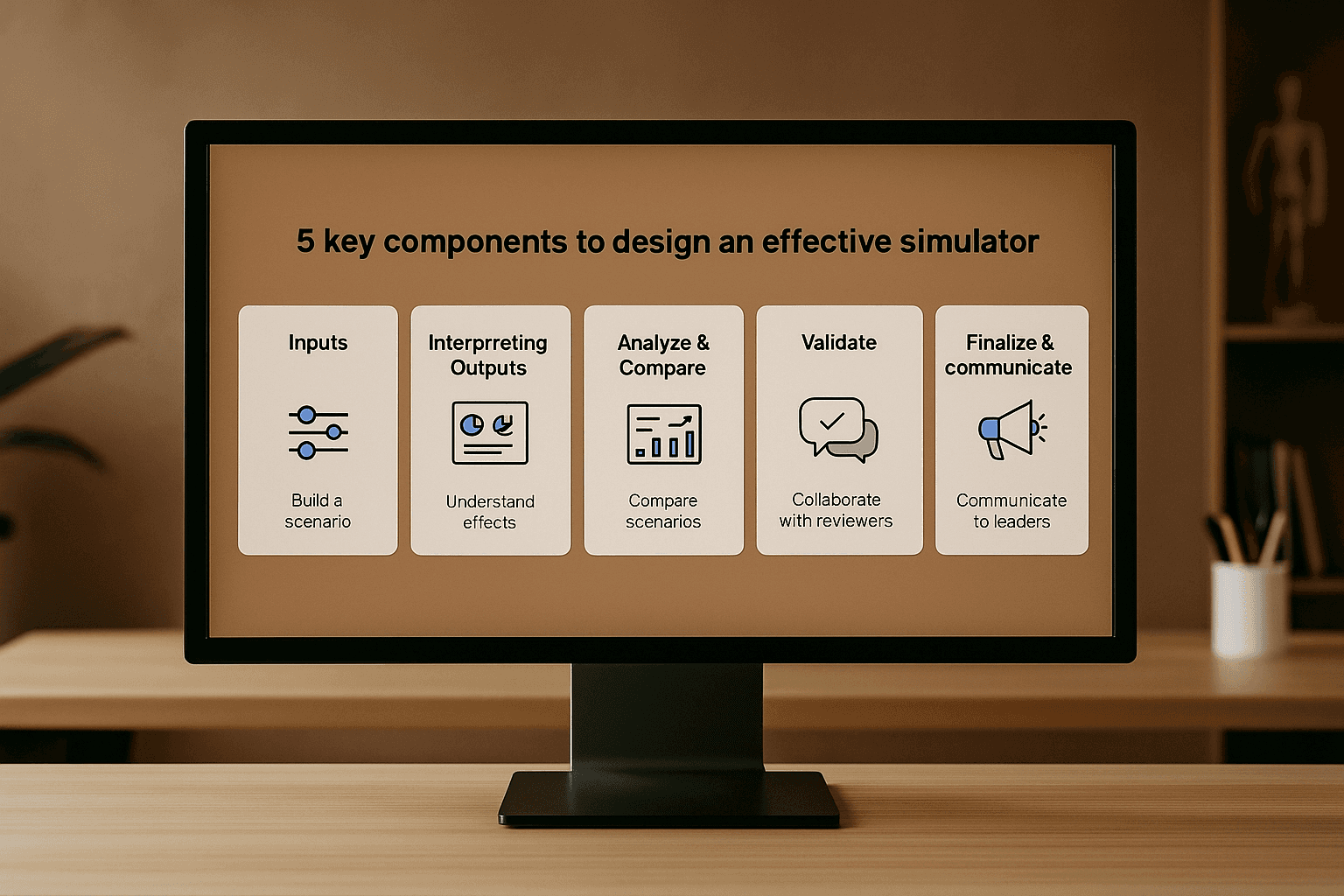
Based on this research, I defined a five-component framework outlining the key building blocks of any effective simulator:

Inputs

To define assumptions and build scenarios.

Interpret

Output

To understand the effects of each scenario

Analyse &

Compare

To evaluate multiple simulations side-by-side

Validate

To collaborate and refine the final scenario with peers

Finalise &

Communicate

To finalize and share outcomes with leadership

Business goals -> Design goals

Translating business goals to design goals

Help category teams make faster, more confident pricing decisions!

  1. Reducing scenario creating time

    Making it faster to build, analyze, compare multiple pricing simulations jk

  1. Integrating the tool into existing workflows

    Increasing adoption of the tool and reflect users' mental models


  1. Lowering the learning curve

    Simplifying interfaces and interactions for occasional users (this tool would be used once/twice a year

Establishing the framework for effective simulator design

Identifying the Gap

While auditing the existing simulation tool, I realized there were no clear benchmarks to evaluate whether a simulator was well-designed or effective.
I initially used standard heuristic frameworks to assess usability, but they didn’t fully capture the end-to-end flow of how a simulator should function. The frameworks helped highlight usability issues, but not what an effective simulator must include to enable confident decision-making.

Speaking to Experts

To bridge this gap, I collaborated with several subject matter experts (SMEs) across analytics, category management, and data science.

Through these discussions, I focused on understanding what makes a scenario simulation truly effective:

  • what information users need,

  • how they interpret outputs, and

  • what helps them reach a confident decision in the fewest iterations possible.

Inputs

To define assumptions and build scenarios.

Interpret

Output

To understand the effects of each scenario

Analyse &

Compare

To evaluate multiple simulations side-by-side

Validate

To collaborate and refine the final scenario with peers

Finalise &

Communicate

To finalize and share outcomes with leadership

Developing the framework

Based on this research, I defined a five-component framework outlining the key building blocks of any effective simulator:

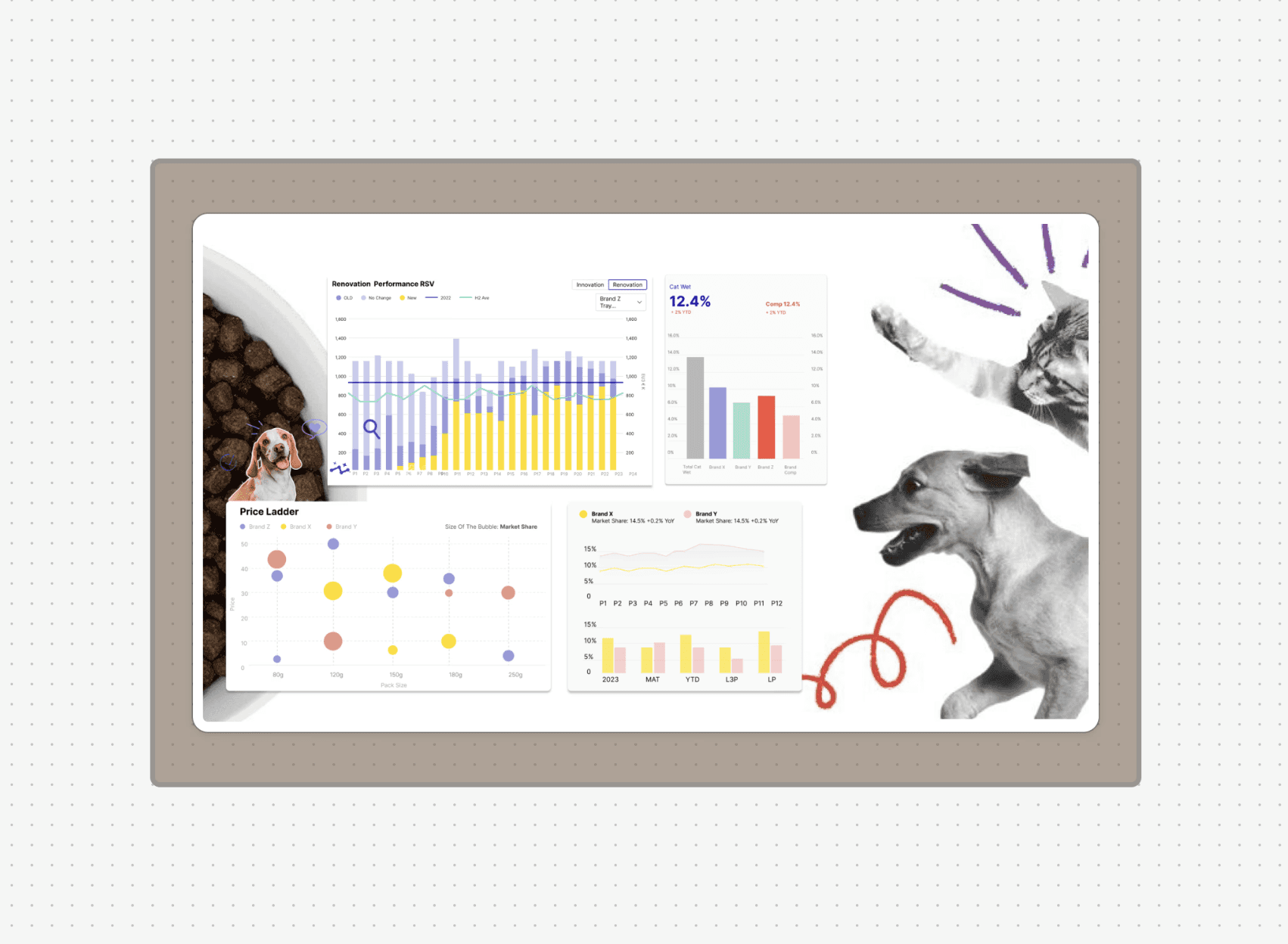
If you’re interested in how this framework evolved, we used it to audit the pricing simulator featured in this case study. It has since been refined and adapted for other simulation tools across the organization. Feel free to reach out if you’d like to learn more about its later applications and iterations.

If you’re interested in how this framework evolved, we used it to audit the pricing simulator featured in this case study. It has since been refined and adapted for other simulation tools across the organization. Feel free to reach out if you’d like to learn more about its later applications and iterations.

Create a free website with Framer, the website builder loved by startups, designers and agencies.