<- Back
Study Overview
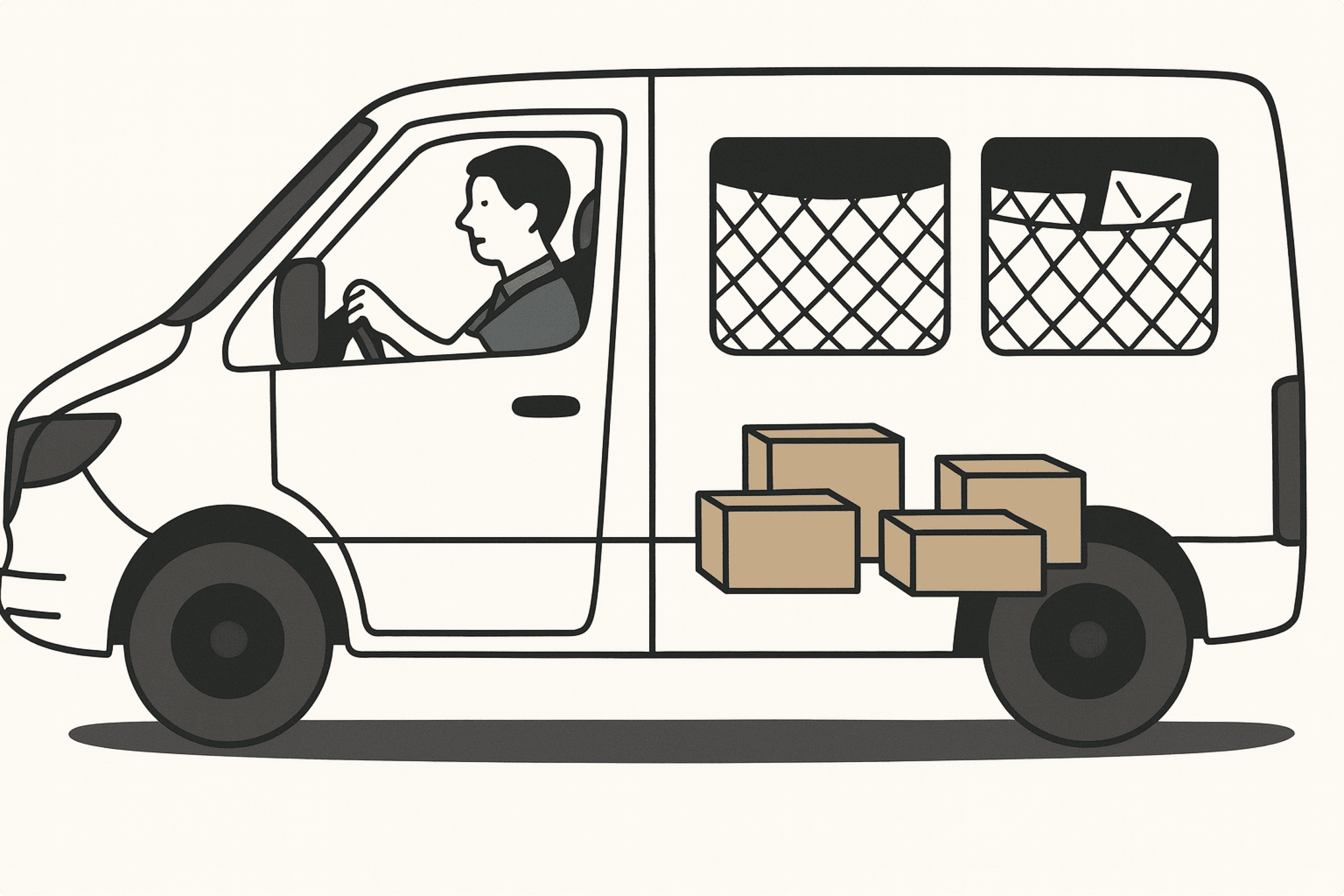
Over two weeks, we observed 11 delivery vans equipped with “Pockets”, for a leading e-commerce logistics company. Pockets are a storage system designed to help delivery associates organize packages more efficiently. The research focused on understanding usability and ergonomics of the system to determine whether the product was effective enough to be scaled across the broader delivery fleet.
Pockets
Goals
Evaluate Usability and Ergonomic Fit
Understand how delivery associates interact with the Pockets system in real-world workflows — assessing accessibility, comfort, and whether the design supports or disrupts natural routines.
Assess Adoption and Contextual Usefulness
Explore how valuable the Pockets are in daily delivery operations, and what contextual factors (package volume, route type, and workflow habits) influence their use or avoidance.
Inform Product and Design Improvements (recommendations)
Translate field observations into actionable recommendations to refine material durability, installation design, and pocket placement and also guiding decisions on whether the system should scale across all delivery fleets.
My Role
As a Human Factors Engineer, I:
Observed and logged 100+ hours of video data across 11 vans.
Analysed and created a custom data logging template for efficient data collection
Identified ergonomic patterns and utilization anomalies.
Conducted exit interviews to explore behaviors observed in video footage.
Collaborated with mechanical engineers to correlate usability findings with material performance.
Co-developed the final report with visuals, data tables, and recommendations for the final readout with the leadership.
Methodology
Study Type
Digital ethnography (Remote video observation + Exit Interviews)
Duration
2 weeks
Participants
Delivery associates assigned each day to the delivery vans
Data Sources
Data portal consisting all the videos ; exit interviews
Data Logging Tool
Custom Excel template designed and pilot tested to capture the right metric
Analysis Approach
Mixed-methods - quantitative behavioral coding paired with qualitative insights from exit interviews
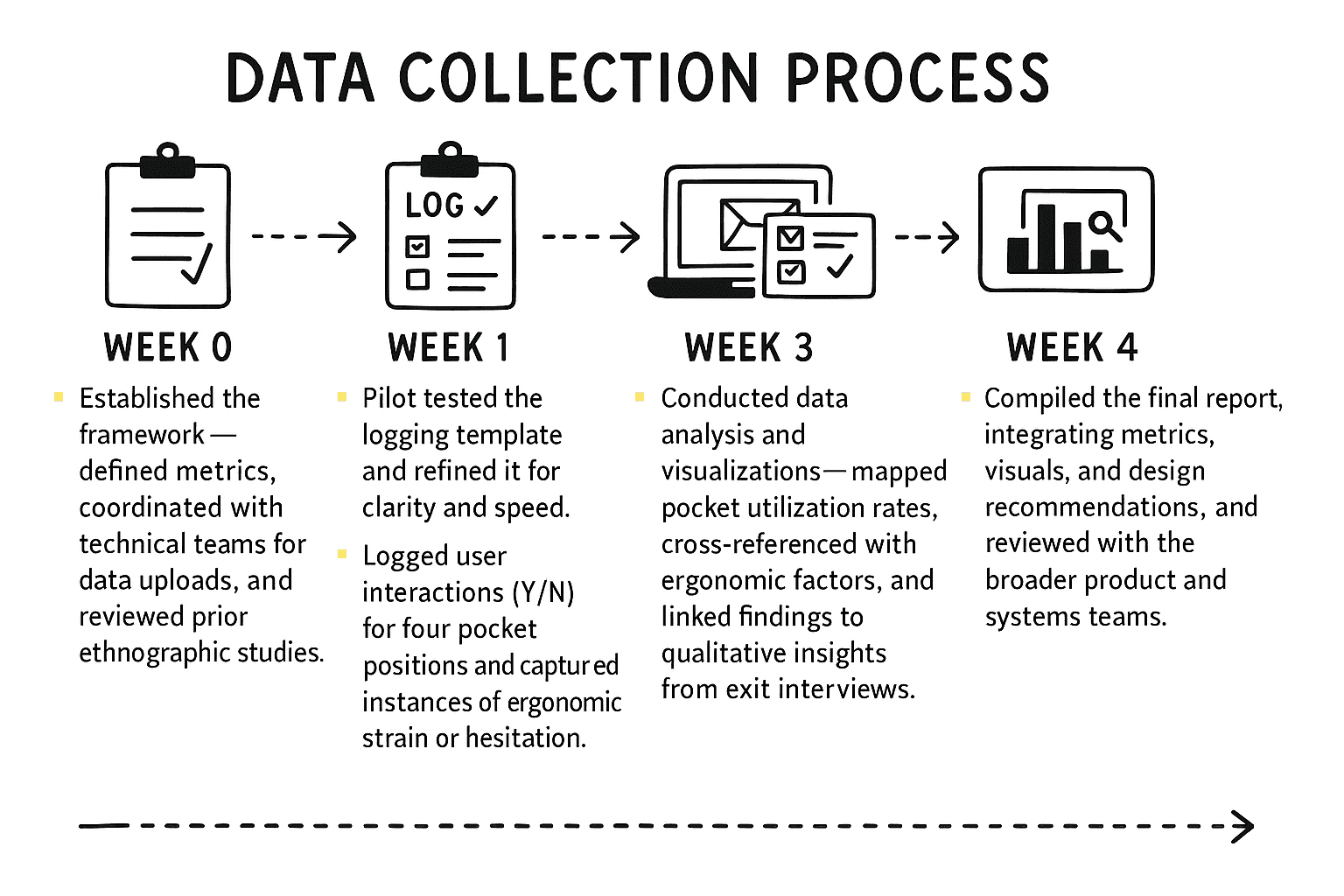
Why digital ethnography? We chose a digital ethnography approach because this study took place during one of the busiest delivery seasons — a major sale campaign where associates were already under immense time pressure. Conducting traditional in-person field studies or usability sessions would have disrupted their workflow and risked interfering with delivery targets.
If we noticed something unusual — like inconsistent pocket use or creative repurposing of the storage space — we made sure to follow up to uncover the reasoning behind it through exit interviews
Data Analysis Reliability Measures
What really helped ensure we did the ethnography with lesser margin of error:
Alpha test of the logging framework before full rollout
Inter-coder validation between multiple researchers
Triangulation of behavioral and interview data for contextual accuracy
What really helped ensure we did the ethnography with lesser margin of error:
Alpha test of the logging framework before full rollout
Inter-coder validation between multiple researchers
Triangulation of behavioral and interview data for contextual accuracy
What really helped ensure we did the ethnography with lesser margin of error:
Alpha test of the logging framework before full rollout
Inter-coder validation between multiple researchers
Triangulation of behavioral and interview data for contextual accuracy
Example of the data captured
1. Pockets usage data
This was captured by observing the delivery associates' interactions with the 4 pockets
Ergonomics data
This was captured in the "use errors"
Mechanical wear and tear
Captured in the "pocket rip" data
What really helped ensure we did the ethnography with lesser margin of error:
Alpha test of the logging framework before full rollout
Inter-coder validation between multiple researchers
Triangulation of behavioral and interview data for contextual accuracy
What really helped ensure we did the ethnography with lesser margin of error:
Alpha test of the logging framework before full rollout
Inter-coder validation between multiple researchers
Triangulation of behavioral and interview data for contextual accuracy

Key Findings
Pockets at Eye Level Were Used the Most
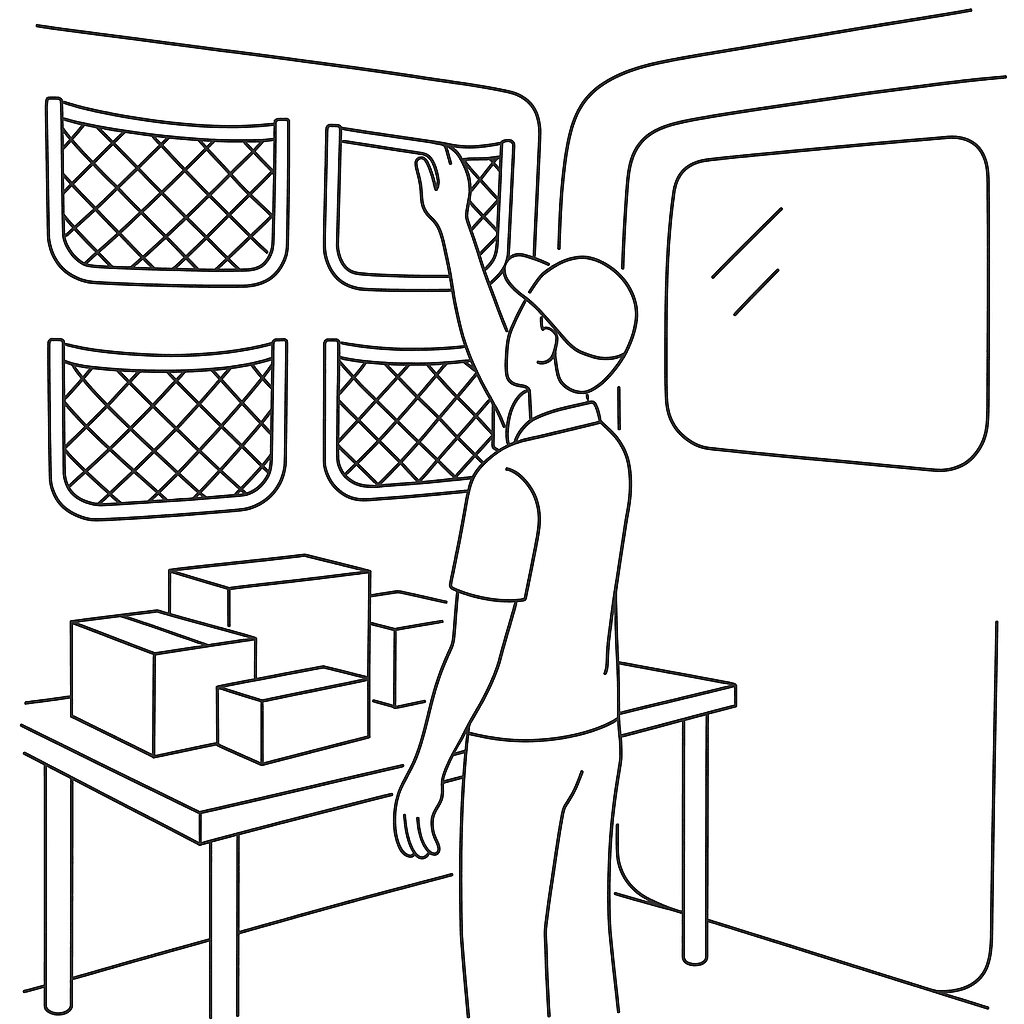
Over two weeks, we observed and noticed a clear pattern: delivery associates preferred using the pockets that were at their eye level.
The top two pockets consistently showed higher utilization compared to the lower ones. During the exit interviews, most participants mentioned that reaching for the lower pockets required bending or extra effort, which felt inconvenient during quick delivery cycles.
Utilization rate of upper pockets was 2.5× higher than the lower pockets, indicating strong ergonomic influence on pocket adoption.
Low Utilization Due to Limited Package Volume
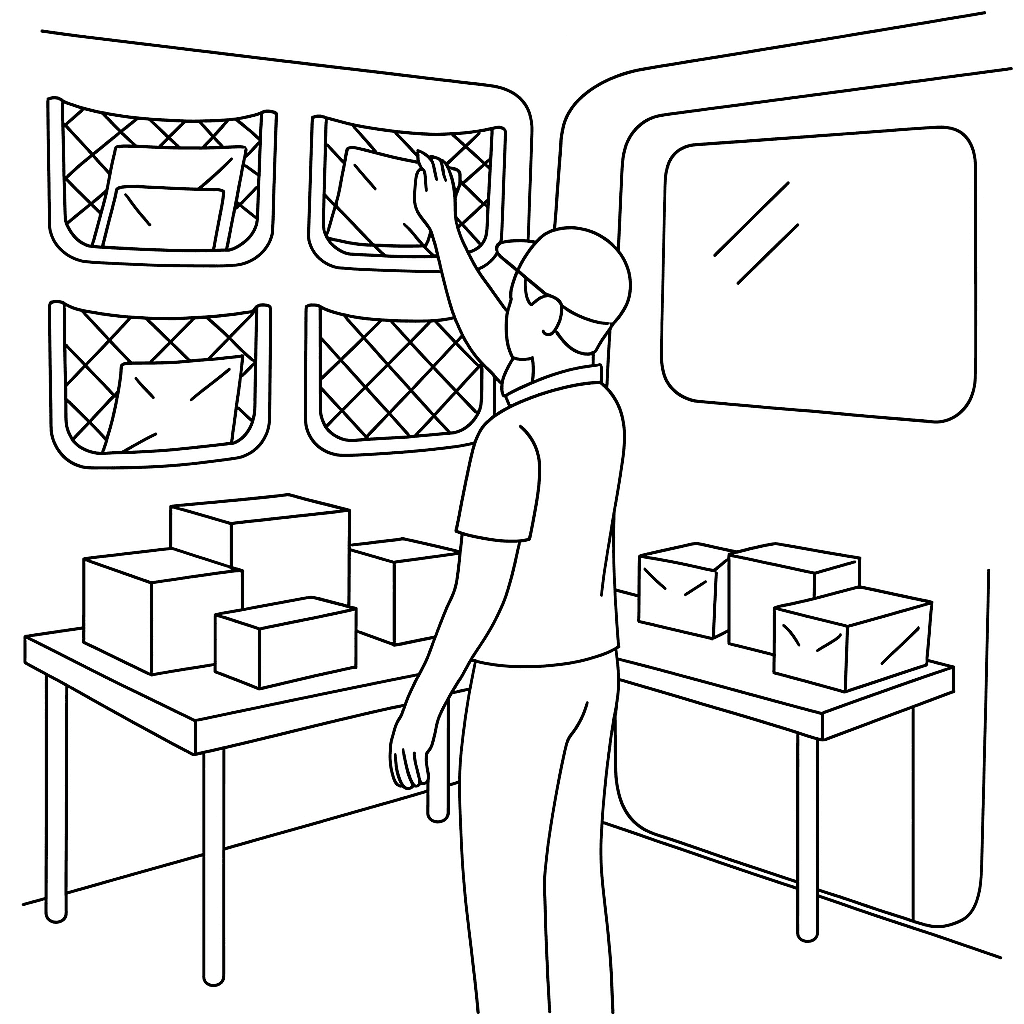
While the pockets themselves were functional and easy to use, we found that delivery associates often didn’t need them.
In most vans, the tables weren’t full, and the package load was small enough that the associates didn’t feel the need for additional storage.
We recommended that pockets be deployed only in high-volume distribution centers, where storage constraints were more common.
Durability Issue Identified Early
In one of the vans, we noticed that a pocket had torn open due to rough usage. After analyzing the design, we found that the issue stemmed from the knotting mechanism used to secure the threads.
We shared this observation with the mechanical team, who quickly redesigned the knots for better durability and load distribution.

Reflections!
It Wasn't Boring for Long
At first, I'll be honest - watching hours of delivery van footage felt tedious. But once I started seeing patterns and optimizing my logging process, it became genuinely interesting. I began recognizing individual driver habits, noticing when something unusual happened, and connecting behaviors to broader insights.
Small Operational Gaps = Big Missed Opportunities
I realized too late that we hadn't linked driver IDs to specific vans, which limited our ability to trace behaviors back during interviews. It's a simple operational detail, but it would have made our insights far more actionable. In future studies, I'd fix that from day one.
Make Research Visible
I shared quick, digestible insights from the footage in weekly updates with the mechanical and software teams. This kept the study visible, built cross-functional curiosity, and made collaboration smoother. When teams could see the "why" behind driver behaviors, decision-making improved downstream.

Check out my other projects
Heuristic Evaluation
Business Framework
Enterprise adoption
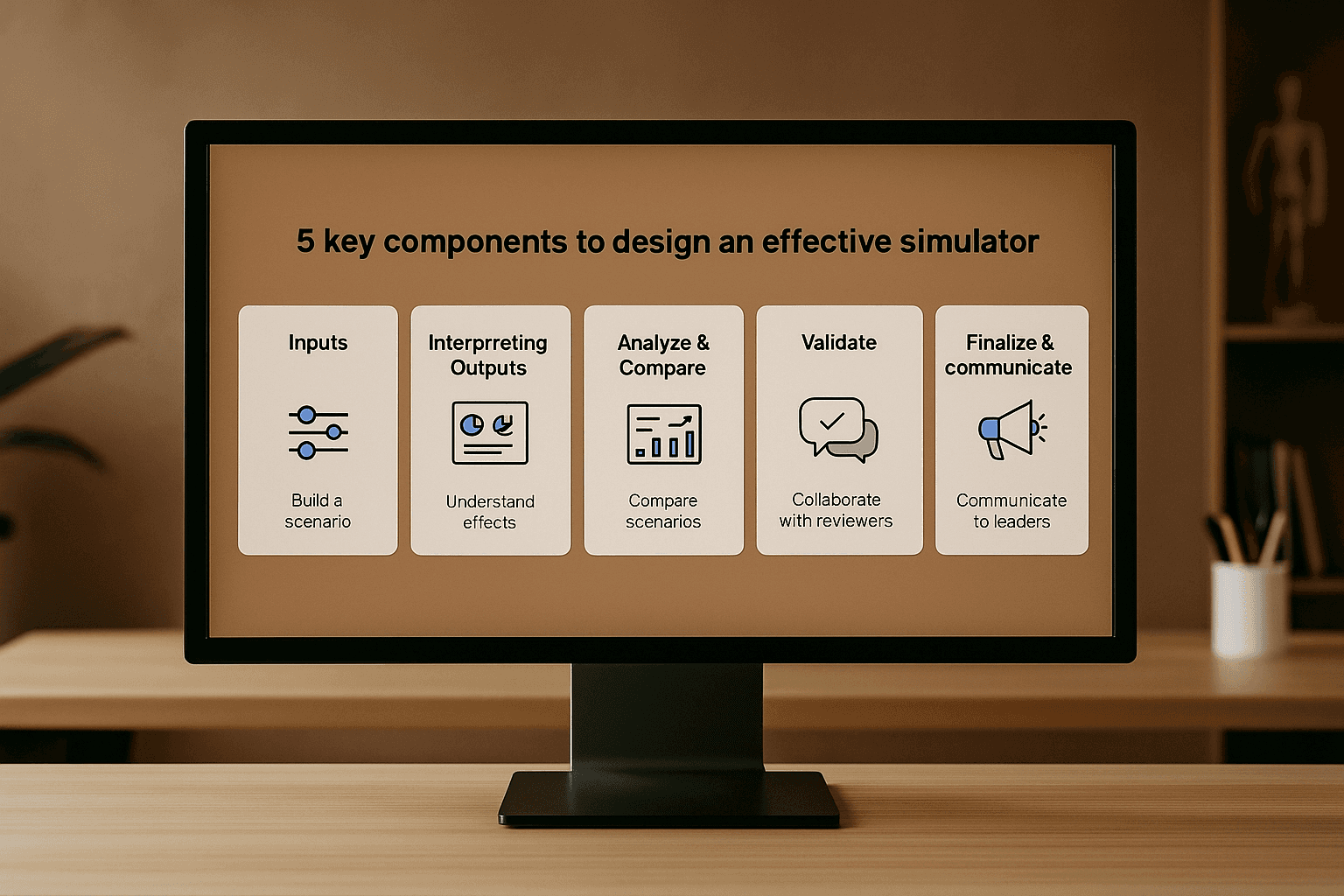
Created a Reusable Framework for Evaluating and Building Simulation Tools for Enterprise and Fortune 500 Clients
Led the end-to-end design and strategy of a visualization-led analytics dashboard, aligning business goals and user needs to help teams make faster, data-driven decisions.
Ethnography study
Fortune 10 client
Data analysis
Led an end-to-end ethnographic study that prevented premature scaling of an in-van storage system, avoiding an estimated $500K+ in deployment costs.
Developed a custom ethnography framework to analyze 100+ hours of delivery footage, identifying ergonomic risks and saving billions in premature product investment for a fortune 5 logistics & tech client